Why the Smoke Smell Keeps Coming Back (and How to End It)
By The Meridian Dispatch Desk · 6/19/2026
The most frustrating part of a small fire is often what happens weeks after the flames are out: the smoke smell returns. It fades after a cleaning, then comes back on the first humid day, stronger near fabrics and porous surfaces. The reason is that most cleaning moves smoke odor around rather than removing it — and until you treat the chemistry, it keeps finding its way back.
Smoke is not dust. It is a fine, often acidic residue produced by incomplete combustion, and its particles are small enough to settle into every pore of a structure — drywall, grout, upholstery, the paper backing of insulation. Wiping a surface removes the film you can see while leaving the residue that has bonded into the material underneath. Heat and humidity then reactivate that residue, which is why the odor seems to have a weather forecast.
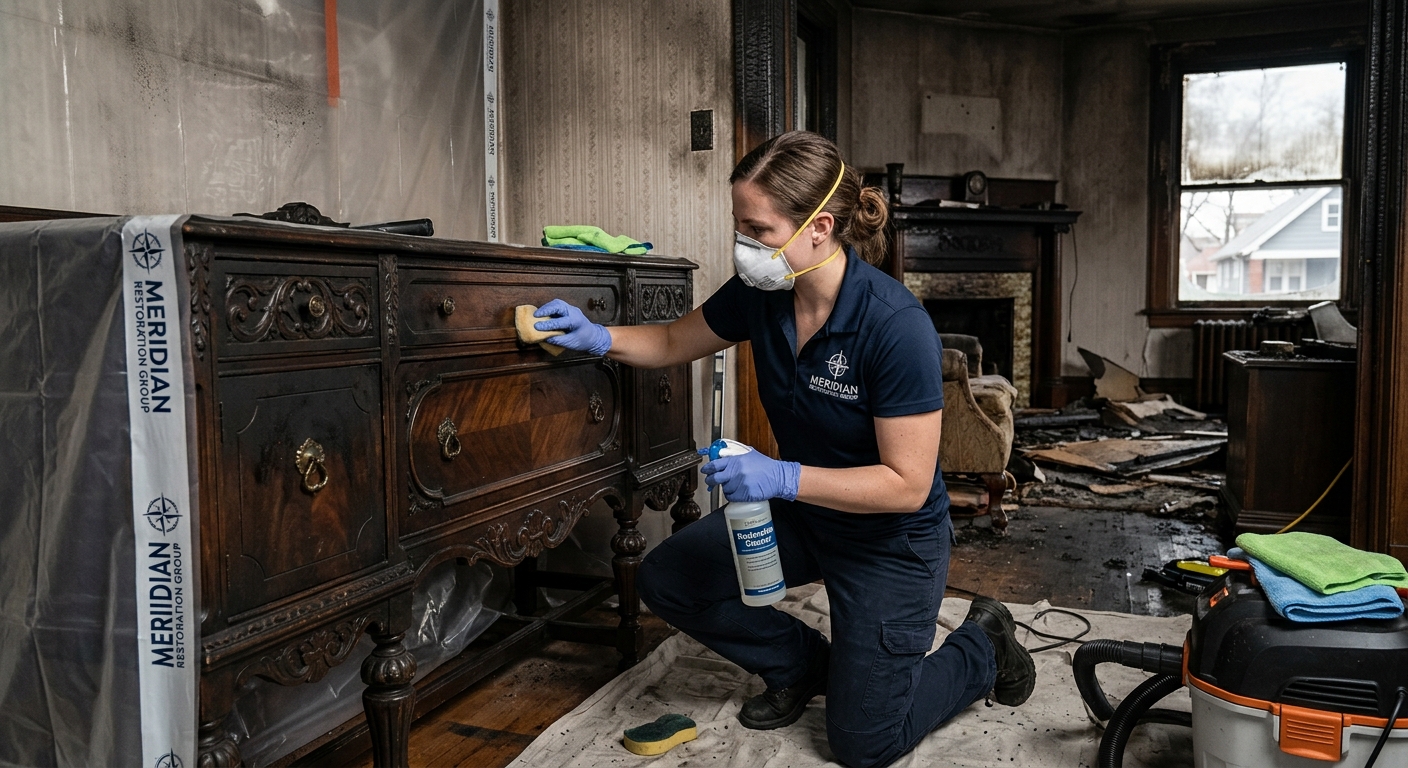
Neutralizing it takes a different approach for each layer. Hard surfaces are HEPA-vacuumed and chemically sponged to lift acidic residue before it etches finishes. Porous substrates that hold odor are sealed. And the odor that has penetrated into voids and contents is treated with thermal fogging or hydroxyl generation — processes that produce a vapor small enough to follow the same path the smoke took, reaching residue that no wipe can touch.
The order matters, too. Sealing a surface before the residue is removed traps the odor inside; fogging a space that is still coated in soot wastes the treatment. A proper fire restoration works from stabilization, to soot removal, to odor neutralization, to restoration — each step in sequence, each verified before the next begins.
If you have cleaned a smoke-affected space more than once and the smell keeps returning, the residue is still there — it is simply out of sight. The fix is not more cleaning; it is source treatment by someone with the equipment to reach where the smoke went. Done correctly, it ends the odor for good rather than scheduling its next appearance.